
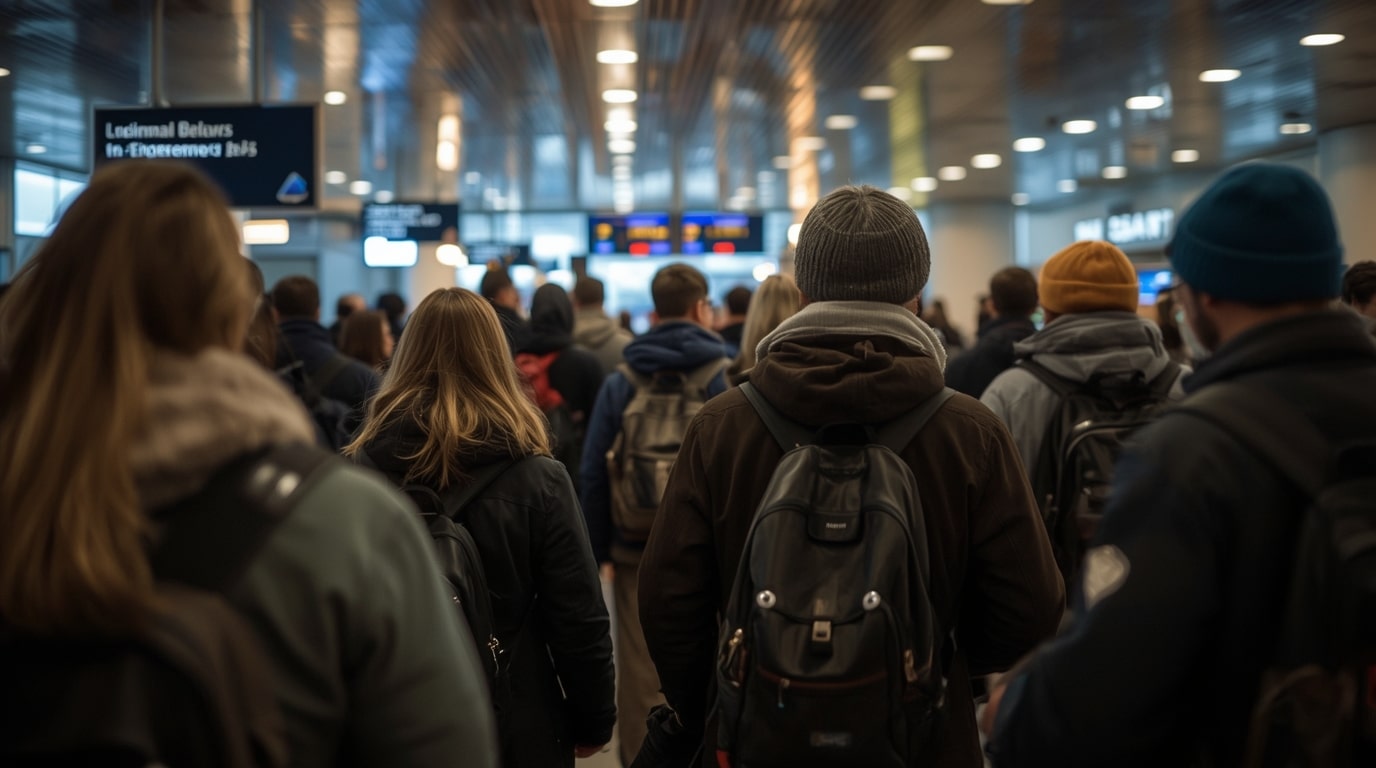
With families on the continent making last arrangements about the Christmas and New Year holidays, a new digital frontier will interfere with the holiday madness. The European Union gains fast and smoother border controls with the long-anticipated Entry/Exit System (EES) taking effect today, which also comes with the downside of causing delays in most airports, train stations, and ferry ports.
In the snow-covered streets of Helsinki as well as on the sun-warmed beaches in Malta, the tourist population is on the verge of getting ready for the most difficult vacation in a long time.
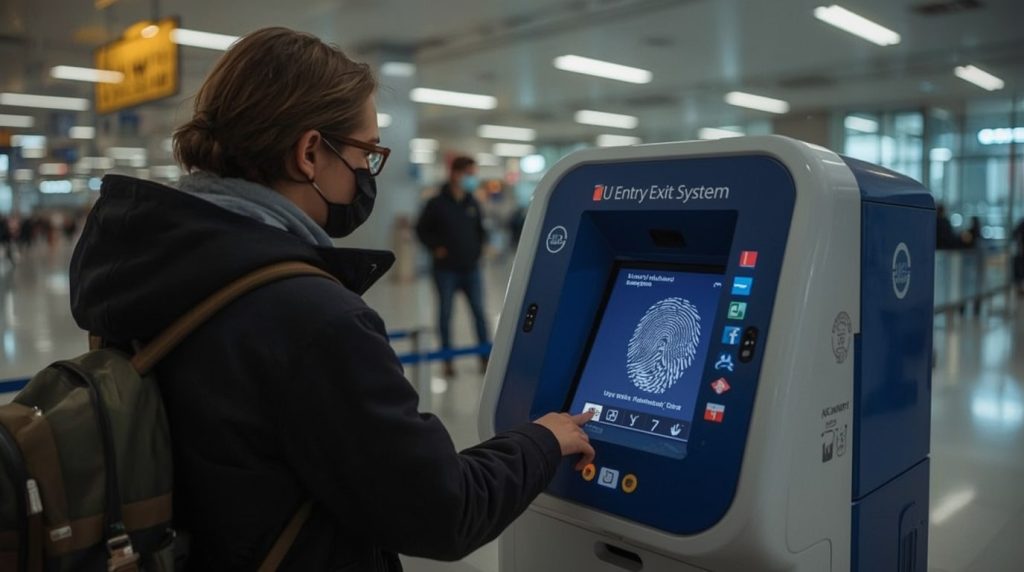
The EES is a biometric database to monitor the non-EU visitors, and it replaces the traditional passport stamp with the automatic scan of the fingerprints and facial image. The authorities are celebrating it as a step towards greater security and rapid processing, but the analysts are aware of teething issues that may spill over to bottlenecks.
According to a policy analyst in Brussels, this is not a territory that has been heavily implemented. It is millions of entries in the busiest season, and any hitch would change Christmas joy to Christmas aggravation.
Popular Curfews Predicted in Major Pivots
The implementation takes the greatest impact at key ports of entry. The Paris Charles de Gaulle Airport, which is the principal entry point to the U.S. and Asian holiday flights, estimates that its processing time will increase to more than an hour per passenger.
The same situations should be anticipated in Frankfurt, Fiumicino, Barcelona, and the El Prat airports, where the line may be as long as it takes at already overcrowded airports during the winter. Travellers using Eurostar to travel between the UK and France have to be pre-registered through mandatory apps, and a lack of compliance will mean that they will be denied.
Even further south, the island-hopping ferries of Greece and Spain will become integration points of EES checkpoints, and may result in hours of idle ships. The small airport in Malta, which is the centre of charter flights in the Mediterranean, has already given out warnings of a maximum of 90 minutes wait. Even the northern bastions, such as the Helsinki-Vantaa of Finland, are preparing, and staffing is being increased to deal with the swarm of Lapland-bound skiers.
Poland, which is frequently crossed by routes to Eastern Europe, has banded with neighbours in order to dampen the effects. Warsaw Chopin Airport is also working on the pilot of mobile EES kiosks to ease the burden of the main counters.
Polish spokesperson of the transport ministry stressed this, fondly saying We are in this together, which referred to the drills together with Germany and Italy. However, as the expected number of crossings will be more than 30 million during December alone, coordination will be challenged as never before.
Airlines are scrambling, too. The low-cost carriers such as Ryanair and easyJet that dominate intra-EU routes have been filling in-boxes with notifications of the need to have biometrics registered in advance.
Lufthansa and Air France, among the major players, are waiving the change fees on the affected bookings, which is a gesture to the imminent reshuffles. One of the carrier CEOs posted on social media that people should expect the unexpected, and should bring with them patience in addition to the gifts.
Technological Victory or Vacationer Nightmare?
Fundamentally, the EES seeks to seal loopholes in the open-border ethos in the Schengen Area. Through recording entry and exit information, it will warn against any overstays and strengthen anti-terrorism practices- priorities that have been sharpened by recent global tensions.
The system will be combined with the new European Travel Information and Authorisation System (ETIAS), which will be available by 2026 and a complete visa-waiver system for short-stay visitors.
Nonetheless, the devil is in the details. The size of the database, which is storing sensitive data lasting as long as five years, is lamented by privacy advocates in an age that is becoming increasingly threatened by cyber terrorists.
Technical hiccups are huge: the beta tests in select ports showed software delays and scanner issues, which were worsened by the fact that the time of the holiday came with a flood of biometric submissions.
The effect is far-reaching for non-EU citizens, who are the main targets of the system. Americans who dream of seeking mulled wine in Vienna or Britons travelling after Brexit have to use a pre-travel portal now, where they have to upload photos and prints several weeks in advance.
Tour operators say that cancellations have increased by 15% and some are rerouting their customers to EES-free destinations such as Iceland or Switzerland, at least in the short term, not wholly integrated into Schengen.
Voices from the Frontlines: Travellers Gear Up
On earth, responses are mingled with cynicism. London teacher Sarah Jenkins, who was going to Berlin to meet her family, downloaded the EES app last week. It is the same thing as checking in, except that you check in with your entire face, she jests.
Hopefully, this will not malfunction in the middle of the scan. Meanwhile, the Tokyo-based executive Hiroshi Tanaka, who is headed to Milan, fears going to distant lounges with no connection. One line of delay, and we lose our connection, and I say the same, and the Asia-Pacific lines are following.
The executives in the industries are advocating grace periods. The European Travel Commission, which represents tourism boards in Portugal to Estonia, pushes to increase the soft launch until January. Hotels and attractions, such as Amsterdam canal cruising to Acropolis tours in Athens, prepare to face the risk of no-shows with contingent measures in case of such occurrences, such as flexible vouchers.
Yet, silver linings emerge. Millennials who are tech-savvy are accepting the change as a move towards the journey of smooth and app-saturated travels. Pilot project participants have stated that clearance is 20% faster when they get registered. Next generation, says a Dutch border guard. It might become clunky today, but it is going to be revolutionary in the future.
Sailing Through the New Normal: How to Be a Smooth Sailor
With time running out till midnight, there is plenty of advice on what to do in a practical way. Apply in time through the EU portal- delay in processing may not allow access. Light pack to secure fast, and track airline applications to get real-time notifications. Early morning flights are preferable to avoid evening traffic crushes, and access to a lounge is an option to have buffer time.
To the flexible, other beckons would be the Adriatic coast of Croatia, currently EES-light, or the Norwegian fjords, which allow the softening of tech changes by natural borders. Portugal Algarve wellness retreats are a guarantee of peaceful retreats during the storm.
Finally, the implementation of EES highlights the dynamic nature of the travel industry, cross-weaving of innovation and tradition, security and impulsivity. This is the start of December 5, when Europe is haloed with holiday lights, and this could change the definition of yuletide trips, creating a memory of strength and happiness. Adieu, however, strap on: the highway is high tech, and it is unforgiving, and distinctly European.